

Table of Contents
ToggleThe Hidden Dangers of Sitting Too Much: How a Sedentary Lifestyle Is Silently Damaging Your Health
In today’s modern world, many people spend most of their day sitting—whether working on a computer, scrolling on their phones, studying, or watching TV. While it may seem harmless, research shows that a sedentary lifestyle is one of the biggest hidden threats to long-term health. In fact, sitting for long periods has been compared to smoking in terms of its negative impact on the body.
What Does “Sedentary Lifestyle” Mean?
A sedentary lifestyle refers to spending long periods with little to no physical activity. This includes sitting or lying down for most of the day, with minimal movement. Even if you exercise occasionally, long hours of sitting can still harm your health.
The Health Dangers of Sitting Too Much
Many people underestimate how dangerous excessive sitting can be. Here are some of the most serious risks:
1. Increased Risk of Heart Disease
When you sit for long hours, your blood circulation slows down. This can lead to the buildup of fatty deposits in your blood vessels, increasing the risk of heart disease and high blood pressure.
2. Weight Gain and Obesity
Sitting burns very few calories. Over time, this leads to weight gain, especially if combined with unhealthy eating habits. A sedentary lifestyle makes it easier to accumulate body fat, particularly around the abdomen.
3. Higher Chances of Type 2 Diabetes
Prolonged sitting affects how your body regulates blood sugar. It reduces insulin sensitivity, increasing the risk of developing type 2 diabetes.
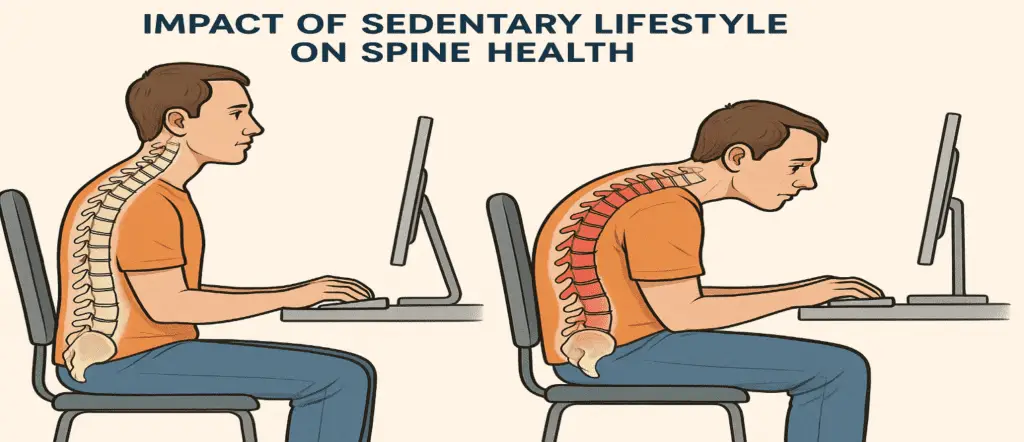
4. Poor Posture and Back Pain
Spending hours sitting, especially with bad posture, puts pressure on your spine. This can lead to chronic back pain, neck stiffness, and poor posture over time.
5. Mental Health Effects
Lack of movement doesn’t just affect your body—it also impacts your mind. A sedentary lifestyle has been linked to increased levels of stress, anxiety, and even depression.
Why Sitting Is So Harmful
When you sit for extended periods, your muscles—especially in your legs and core—become inactive. This slows down metabolism and reduces your body’s ability to regulate blood sugar and break down fat efficiently. Over time, these effects build up, leading to serious health problems.
Simple Ways to Stay Active During the Day
The good news is that you don’t need a gym membership or intense workouts to reduce the risks. Small, consistent changes can make a big difference:
- Take short breaks every 30–60 minutes
Stand up, stretch, or walk around for a few minutes. - Use the stairs instead of elevators
This is an easy way to add movement to your day. - Walk while talking on the phone
Turn idle time into active time. - Set movement reminders
Use your phone or computer to remind you to get up and move. - Do light exercises at home
Simple activities like stretching, squats, or jumping jacks can help.
How Much Movement Do You Really Need?
Health experts recommend at least 150 minutes of moderate physical activity per week. That’s just about 20–30 minutes a day. Activities like walking, cycling, or even dancing can help you stay healthy.
Building a Healthier Lifestyle
Changing your habits doesn’t have to be difficult. Start small and stay consistent. Replace some of your sitting time with movement, and gradually build more active habits into your daily routine.
Remember, your body is designed to move—not sit all day.
Conclusion
A sedentary lifestyle may feel normal, but it comes with serious hidden dangers. The longer you sit, the higher your risk of developing chronic health problems. The good news is that simple lifestyle changes can significantly improve your health and well-being.
Start today. Stand up, move more, and take control of your health—because small steps can lead to big changes.
CHECK THIS ARTICLE ALSO:: Healthy weight-loss how to lose fat without starving