
Everyone wants to live longer. But if you scroll through social media for five minutes, you’ll find someone selling a “longevity secret” — a $200 supplement stack, an ice bath routine, or a diet so restrictive it sounds more like punishment than a plan. The truth is less flashy and a lot more useful: longevity isn’t a hack. It’s a handful of boring, consistent habits that compound over decades.
This guide breaks down what the research actually supports, what’s still uncertain, and how to build a longevity routine you can sustain for the next 40 years — not just the next 40 days.

What “Longevity” Really Means
Before diving into tactics, it helps to separate two ideas that get lumped together constantly: lifespan and healthspan.
- Lifespan is simply how many years you’re alive.
- Healthspan is how many of those years you spend in good physical and cognitive health — free from chronic disease, mobility limitations, and cognitive decline.
Most people, when they say they want to “live longer,” actually mean they want a longer healthspan. Nobody dreams of spending an extra fifteen years in a hospital bed. The goal of any serious longevity strategy should be compressing morbidity — pushing disease and decline as close to the end of life as possible, rather than simply delaying death by a few years while quality of life deteriorates.
This distinction matters because it reframes the entire conversation. You’re not just trying to add candles to a birthday cake. You’re trying to stay strong, sharp, mobile, and independent for as long as possible.
The Four Pillars That Actually Move the Needle
Longevity researchers — including those studying the world’s “Blue Zones,” where people routinely live past 90 with low rates of chronic disease — keep coming back to the same core pillars. None of them are exotic. All of them are proven.
1. Movement: The Closest Thing to a Miracle Drug
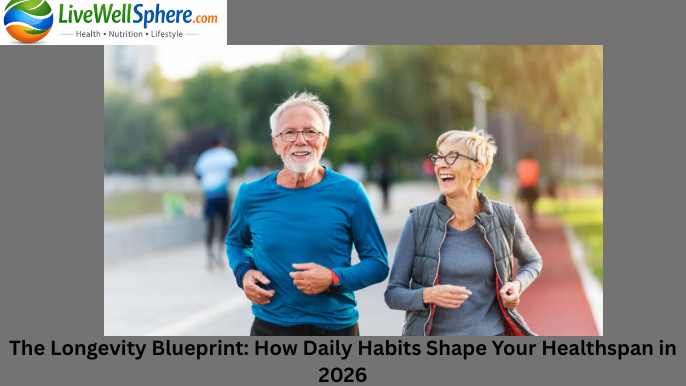
If there were a pill that reduced all-cause mortality by 30–40%, improved mood, protected your brain, strengthened your bones, and regulated blood sugar, it would be the most prescribed medication on Earth. That “pill” already exists — it’s called exercise.
The research on movement and lifespan is some of the most consistent in all of medicine. A few key points:
- Cardiovascular fitness (VO2 max) is one of the strongest predictors of longevity ever studied, arguably stronger than smoking status or diabetes in some large cohort studies. People in the lowest fitness percentile have dramatically higher mortality risk than even moderately fit individuals.
- Strength training matters just as much as cardio, especially after age 40. Muscle mass and grip strength are strongly associated with survival, largely because they protect against frailty, falls, and metabolic dysfunction.
- You don’t need to be an athlete. Studies consistently show the biggest jump in benefit happens when someone moves from sedentary to “somewhat active.” The returns diminish after that, though they never disappear.
A practical target: aim for 150–300 minutes of moderate cardio per week, plus two to three strength-training sessions. If that sounds like a lot, start with a 20-minute walk after dinner and one bodyweight workout a week. Consistency beats intensity every time.
2. Nutrition: Less Dogma, More Pattern
Diet culture loves absolutes — keto is the answer, or veganism is the answer, or intermittent fasting is the answer. The actual longevity research is far less tribal. Across nearly every population known for long, healthy lives — from Okinawa to Sardinia to the Nicoya Peninsula — a few patterns repeat:
- Mostly plants, minimally processed. Not necessarily vegetarian, but vegetables, legumes, whole grains, and nuts form the base of the diet.
- Protein adequacy, especially with age. Older adults often need more protein per pound of bodyweight than younger adults to maintain muscle mass, not less.
- Caloric moderation, not starvation. Most long-lived populations eat until they’re roughly 80% full rather than stuffed — a habit sometimes called “hara hachi bu” in Okinawan culture.
- Minimal ultra-processed food. This is probably the single strongest dietary correlate with poor metabolic health in modern research, more so than any specific macronutrient ratio.
If you want one piece of nutrition advice that outperforms almost every trendy diet: cook more meals at home using whole ingredients, and treat ultra-processed food as an occasional guest rather than a daily staple.
3. Sleep: The Recovery System You Can’t Bypass
Sleep doesn’t get the same attention as diet or exercise, but the data on chronic sleep deprivation is genuinely alarming. Consistently sleeping less than six hours a night is linked to higher risk of cardiovascular disease, impaired glucose metabolism, weakened immune function, and accelerated cognitive decline.
Sleep is when your brain clears metabolic waste (including proteins linked to neurodegenerative disease), when muscle repair happens, and when hormones that regulate hunger and stress reset. Skimping on it doesn’t just make you tired — it undermines almost every other longevity habit on this list.
Practical sleep upgrades that actually have evidence behind them:
- Keep a consistent wake time, even on weekends — this matters more than bedtime.
- Get natural light exposure within an hour of waking to anchor your circadian rhythm.
- Keep the bedroom cool, dark, and screen-free in the final 30 minutes before sleep.
- Limit caffeine after early afternoon; its half-life is longer than most people assume.
4. Stress and Connection: The Underrated Pillar
Chronic psychological stress isn’t just “in your head.” It has measurable physiological effects — elevated cortisol, increased inflammation, higher blood pressure, and even accelerated cellular aging as measured by telomere length in some studies.
Just as important, and often overlooked, is social connection. Longitudinal research — including Harvard’s decades-long Study of Adult Development — has repeatedly found that the strength of a person’s relationships is one of the most powerful predictors of healthy aging, in some analyses outperforming cholesterol levels or exercise habits.
This isn’t a call to become a extrovert. It’s a call to protect real relationships — the friend you call when things go wrong, the family dinner you don’t cancel, the community you show up for. Loneliness is now considered by some public health researchers to carry mortality risk comparable to smoking.
What About Supplements and Biohacking?
This is where longevity culture tends to get ahead of the science. Compounds like resveratrol, NMN, and rapamycin generate enormous buzz, and some early research — mostly in animals — is genuinely intriguing. But it’s important to be honest about where the evidence currently stands:
- Metformin and rapamycin have promising preclinical data and are being studied in human longevity trials, but they are prescription drugs with real risks and are not approved for anti-aging use. Taking them without medical supervision is not a shortcut — it’s a gamble.
- NMN and NAD+ boosters have shown some interesting results in animal studies, but human data on lifespan extension is still limited and mixed.
- Basic supplementation with actual evidence behind it — vitamin D if you’re deficient, omega-3s if your fish intake is low, creatine for muscle and possibly cognitive support — has far more consistent research behind it than most trendy longevity compounds, and it’s a lot cheaper.
The honest takeaway: supplements are, at best, a small multiplier on top of the fundamentals. No pill compensates for chronic sleep deprivation, a sedentary lifestyle, or a diet built on ultra-processed food. If you’re optimizing supplements before you’ve optimized sleep, movement, and diet, you’re solving the wrong problem first.
A Realistic Weekly Longevity Framework
Rather than trying to overhaul your entire life overnight, here’s a framework that reflects what the research actually supports, structured so it’s sustainable:
Movement
- 3–4 days of brisk walking, cycling, or another moderate cardio activity (30+ minutes)
- 2–3 days of resistance training targeting major muscle groups
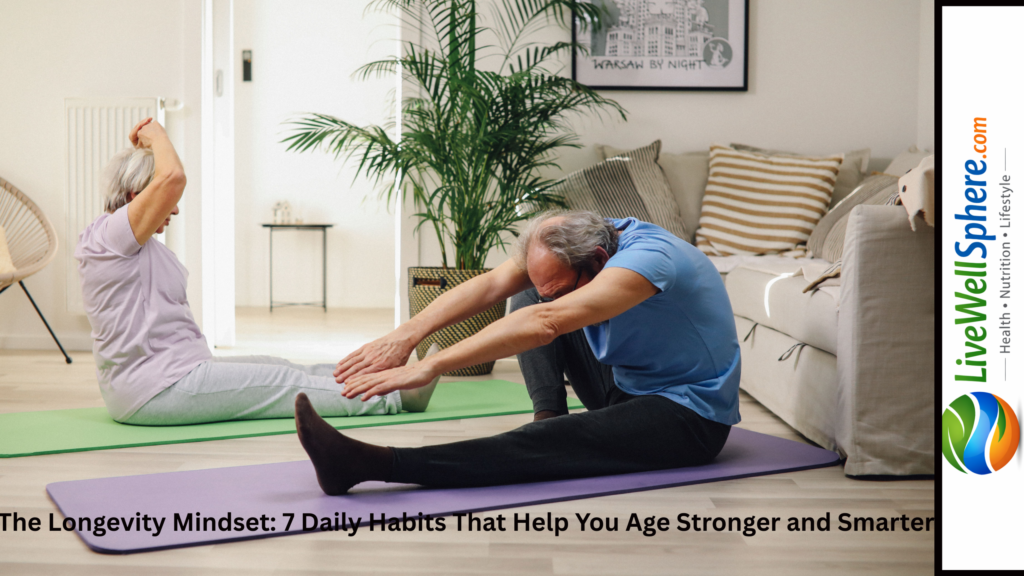
- Daily mobility work or stretching, even just 5–10 minutes
Nutrition
- Vegetables or legumes at most meals
- A consistent protein source at each meal, especially as you age
- Minimal ultra-processed snacks; whole-food alternatives on hand
- Alcohol in moderation, if at all — the “healthy” case for moderate drinking has weakened considerably in recent research
Sleep
- Fixed wake time, seven days a week
- A wind-down routine that doesn’t involve a phone screen
- 7–9 hours as a target, not a luxury
Stress and Connection
- One recurring social commitment per week that you protect like an appointment
- A stress-management practice — meditation, journaling, time outdoors — even 10 minutes counts
- Regular check-ins with a doctor for preventive screenings, since catching problems early is itself a longevity strategy
The Bottom Line
Longevity science, stripped of the marketing, is refreshingly unglamorous. The people who live the longest, healthiest lives aren’t the ones chasing the newest biohack — they’re the ones who move regularly, eat real food, sleep enough, manage stress, and stay connected to other people. Decade after decade, that’s what the data keeps confirming.
If you’re looking for a place to start, don’t try to fix everything at once. Pick the pillar that’s weakest in your life right now — sleep, movement, diet, or connection — and build one small, repeatable habit around it. Longevity isn’t won in a single dramatic change. It’s built one ordinary day at a time, for the rest of your life.
NOTE: This article is for informational purposes only and is not a substitute for medical advice. Consult a healthcare professional before starting any new exercise, diet, or supplement regimen.