The Silent Productivity Crisis: How AI Overload Is Increasing Digital Fatigue in 2026
Artificial intelligence has transformed the way people work, learn, communicate, and create. From AI writing assistants and smart search engines to automated scheduling tools and virtual companions, technology is now woven into nearly every aspect of daily life.
While these innovations save time and increase efficiency, a growing concern is emerging beneath the surface: AI overload.
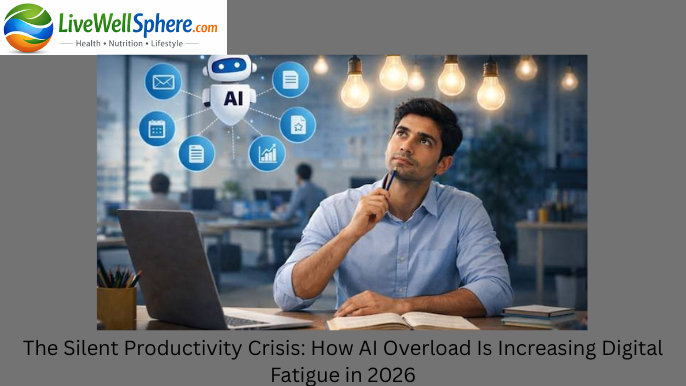
In 2026, many people find themselves interacting with multiple AI systems throughout the day. Emails are generated by AI, meetings are summarized by AI, recommendations come from AI, and even personal decisions are increasingly influenced by algorithms. What was designed to simplify life is beginning to create a new form of digital fatigue.
This silent productivity crisis is affecting attention spans, mental clarity, decision-making abilities, and overall digital wellness. Understanding the impact of AI overload is becoming essential for maintaining a healthy relationship with technology.

What Is AI Overload?
AI overload occurs when individuals are exposed to excessive AI-generated information, recommendations, notifications, and automated interactions.
Instead of reducing cognitive effort, constant AI engagement can increase mental strain by requiring people to:
- Review AI-generated content
- Verify information accuracy
- Evaluate multiple recommendations
- Manage numerous automated tools
- Respond to increased digital communication
The result is a continuous stream of digital input that demands attention and mental energy.
Why AI Overload Is Growing in 2026
Several factors are accelerating this problem:
1. AI Everywhere
Modern apps now integrate AI into nearly every function. Users interact with dozens of AI systems daily, often without realizing it.
2. Information Volume Explosion
AI can generate content faster than humans can consume it. Reports, emails, summaries, social posts, and recommendations arrive constantly.
3. Increased Decision Fatigue
AI often presents multiple options rather than a single answer. While choice can be helpful, too many suggestions can overwhelm the brain.
4. Continuous Notifications
Many AI-powered tools send alerts, reminders, recommendations, and updates throughout the day, fragmenting attention.
Signs You May Be Experiencing AI Fatigue
AI overload can manifest in several ways:
Mental Symptoms
- Difficulty concentrating
- Reduced creativity
- Mental exhaustion
- Brain fog
- Increased stress
Emotional Symptoms
- Frustration with technology
- Irritability
- Feeling overwhelmed
- Anxiety about productivity
Behavioral Symptoms
- Constant app switching
- Excessive checking of AI tools
- Reduced deep work sessions
- Lower engagement in offline activities
Recognizing these signs early can help prevent long-term digital burnout.
How AI Overload Impacts Productivity
Ironically, excessive reliance on AI can sometimes reduce productivity.
Attention Fragmentation
Frequent interactions with AI tools interrupt focus and make it harder to maintain deep concentration.
Reduced Critical Thinking
Overdependence on AI-generated answers can weaken independent problem-solving skills.
Verification Burden
People spend increasing amounts of time checking and validating AI-generated information.
Tool Management Fatigue
Managing multiple platforms, subscriptions, and workflows creates additional mental workload.
Instead of saving time, excessive AI use can sometimes create hidden inefficiencies.
The Mental Health Connection
Digital wellness experts are beginning to recognize a link between AI overload and mental health challenges.
Excessive digital engagement may contribute to:
- Elevated stress levels
- Increased anxiety
- Sleep disruption
- Reduced mindfulness
- Emotional exhaustion
When technology occupies every available moment, the brain receives fewer opportunities for rest and recovery.
Practical Strategies to Reduce AI Fatigue
Limit AI Tools
Use only the AI applications that genuinely improve your workflow.
Schedule AI-Free Time
Designate periods of the day for work and activities without AI assistance.
Practice Deep Work
Set aside uninterrupted blocks of time for focused tasks.
Turn Off Non-Essential Notifications
Reducing alerts helps protect attention and mental energy.
Verify Selectively
Not every AI output requires extensive review. Learn when verification is necessary and when it is not.
Reconnect With Offline Activities
Reading physical books, exercising, spending time outdoors, and face-to-face conversations help balance digital consumption.
The Future of Healthy AI Use
AI is not inherently harmful. When used intentionally, it can increase efficiency, creativity, and access to information.
The challenge for 2026 and beyond is not avoiding AI but using it responsibly. Digital wellness increasingly depends on creating boundaries that allow technology to serve human goals rather than dominate daily attention.
Organizations, educators, and individuals will need to develop healthier digital habits as AI becomes even more integrated into everyday life.
Conclusion
AI is reshaping modern life at an unprecedented pace, but its benefits come with new challenges. AI overload is emerging as a significant digital wellness concern, contributing to fatigue, reduced focus, and mental exhaustion.
By understanding the signs of AI fatigue and adopting healthier technology habits, individuals can enjoy the advantages of artificial intelligence while protecting their productivity, mental health, and overall well-being.
The future of digital wellness will not be determined by how much AI we use, but by how intentionally we use it.